‹ All learning
Learn Enough Codex To Be Dangerous
A hands-on workshop on agentic AI with Codex, run through the Agentic Workflows Club.
Resources
Workshop page
Transcript
Copy transcript
1:00
In this way the large screening group has been identified.
1:56
All right, so I'm going to jump into things, but first let me introduce myself.
2:16
I'm Edmond Corlay, I'm a software engineering team member at the agency fund.
2:20
You might wonder why does philanthropy need a software engineer?
2:25
At the agency fund, in addition to deploying financial capital, we also deploy in-kind
2:31
software engineering, behavioral science, and data science expertise.
2:37
So a lot of what it means to deliver in-kind is not just to help the org build and deliver
2:45
better products, but capacity building, to teach them what we know about how to do things.
2:51
And with AI, you know, in these past three years, AI has really proven value, right?
3:01
We've seen Claude Code launch last year, and the things you're able to do with these agent
3:08
harnesses, it's only growing, you know?
3:11
Things that were impossible for one person are now feasible, and it's hard to grapple
3:15
with.
3:16
So at the agency fund, we wanted to put out what we call AI enablement content, content
3:24
teaching people how to use AI, but more importantly, content that's providing a forum for people
3:29
to share what they're doing with AI, you know, how they're using it for their core workflows.
3:38
And you know, we had a learn enough Claude Code to be dangerous session last month, and
3:46
it was great.
3:47
You know, I learned a lot from folks' questions about, you know, what they really want to
3:52
use these tools for, and that was really helpful.
3:57
Last time, we tried to run all the prompts live, you know, running the prompts and waiting
4:02
for these agents, and then I would field questions while waiting for the agents.
4:08
But this time, I want to try something different, at least in the first half.
4:11
You know, I've prerecorded some speed throughs of, you know, this fundraising AI workflows,
4:20
and then at the end, we'll shift to, you know, a live format where you'll be able to ask
4:28
questions.
4:29
I think we packed too much last time in the two-hour period, because there's so much to
4:33
cover, like so much to cover, and folks had a lot of questions.
4:36
So this time, we'll start it off with some videos, but definitely feel free to just – the
4:43
video is only like 20 minutes of video, so feel free to pause and ask questions.
4:48
I'll make sure to check in with folks so that, you know, I make sure your questions are answered
4:52
or leave questions in the chat.
4:55
Okay.
4:56
So, like I said, you know, we're sealing this Identity Workflows Club with content, but
5:03
ultimately, we want to source the content from the practitioners in the social sector.
5:09
You know, if you go to our website, let me paste this in the chat, just so you have access
5:13
to it.
5:14
We'll also have a follow-along page.
5:17
Yeah, you know, when you go to our website, you can come, and if you have an AI workflow,
5:24
you know, things you're using in your organization that is providing value or, you know, that's
5:31
enabling people to do things that they couldn't do before, especially, please reach out.
5:36
You know, feel free to reach out to me personally.
5:38
I'll leave my email at the end, or you can, you know, submit this form on the website
5:43
just to say what is it and, you know, what's the value it's bringing.
5:49
More than happy – we want to feature your workflow, so, you know, this site and the
5:55
content we put out, more than happy to co-brand things together, but we really want to, you
6:00
know, feature an NGO who's using AI, and it's, like, making an impact, and so that
6:04
others can learn in an easy-to-digest format, you know.
6:09
Another big point of emphasis for us is making the content more self-serve.
6:16
You know, a two-hour workshop, you know, it can be hard to make the time for it, given
6:20
that we're all busy, so if the content can exist as much as possible in a self-serve
6:25
way that whenever you have time, you can just go watch the videos, try to follow along,
6:29
maybe even leave questions that get answered later, that would be very helpful.
6:35
So yeah, we're piloting that format starting with this live workshop.
6:38
We still want to continue a cadence of live, you know, webinars where people get to ask
6:43
their questions live, but we do want to continue to invest in this kind of self-serve content.
6:49
So what we'll be digging into today is, like, you know, how to use these identical tools
6:54
for, like, a demo fundraising pipeline.
6:59
We'll have a demo NGO, you know, that's theoretically trying to raise for pilots, and hopefully
7:07
there'll be things in common with the orgs you guys have so that you can learn things
7:11
from, adapt to your own interventions, or even, like, different tools that you use,
7:18
Gemini, Claude Code, et cetera.
7:22
We have a couple in the pipeline.
7:25
So I'm seeding the fundraising one, even though I've never had to fundraise before, but bear
7:30
with me, but we have a colleague who's going to see, like, what it means to use AI to automate
7:38
a lot of the, you know, newsletters.
7:40
Still have human in the loop, but automate it as much as possible.
7:43
Then we have a behavioral scientist at the agency fund, Dr. Zhezhu Wu, who's going to
7:47
show what it's like to use AI for social science research, mostly, you know, writing, publication,
7:54
as well as, you know, qualitative analysis, like, looking at, like, survey data and trying
7:59
to make sense of it with the help of AI.
8:02
Well, all right.
8:03
So with that, we're going to get into it.
8:08
So here's the video part.
8:10
So if you want to, you know, just have access to the links to look at it later, yeah, here
8:16
we go.
8:20
So yeah, in conversations with folks, it seems like fundraising is one of the biggest, you
8:27
know, pain points in a lot of NGOs.
8:32
And so in talking to people to see what they do, it seems like, you know, there's a pipeline
8:39
of research that starts that research, you know, scouting who's funding what, what open
8:46
calls out there, what closed calls are out there.
8:50
And this information just lives all over the internet, all over WhatsApp chats, or maybe
8:55
even like, you know, on LinkedIn and things like that.
8:57
So it's hard to find, you know, and it's someone's full-time job, it's often people's full-time
9:02
job to just find these opportunities and put together these proposals.
9:06
So what could it look like for AI to, yeah, please, if you have a question, feel free
9:12
to jump in.
9:13
Okay.
9:14
Yeah, so what could it look like to use AI to help with the fundraising pipeline?
9:24
So here's the general pattern, you know, before we get into the videos that I kind of want
9:27
you to grok.
9:28
You know, as an organization, you know, you have your source of truth, like documents
9:34
that describe, like, you know, what's happening and, yeah, there's a source of truth.
9:42
And in engaging different funders, you know, they have their own things they're optimizing
9:48
for.
9:49
This funder's optimizing for livelihoods, this funder's optimizing for maternity and
9:52
newborn health.
9:53
This funder cares about, you know, RCTs, that causal evidence is incorporated for your proposal.
10:00
This funder cares more about, like, cost effectiveness at scale.
10:04
So there's different things they're optimizing for.
10:06
So we're going to walk through a provisional workflow to see, like, how can AI help you
10:12
navigate all of this while maintaining a source of truth for your organization.
10:18
So if you're following along, you know, we have this demo NGO called Djenga Fundraising.
10:25
I'll talk to you in a second, but, you know, if you want to come back later and download
10:32
this deck just to kind of, like, walk through things, you're more than welcome.
10:35
But we're going to start off with the videos just to kind of expedite things.
10:39
And feel free to, like I said, leave any questions in the chat or even ask your question live
10:45
because, you know, it's only 20 minutes of video, but so we have time.
10:49
All right.
10:50
All right.
10:51
Now I'm going to do the check again.
11:09
Welcome, everybody.
11:11
Let's pause it real quick.
11:13
Just thumbs up if you could hear the audio.
11:15
Today we'll be diving into an agentic workflow that you could.
11:20
Okay, great.
11:21
All right.
11:22
So I'm going to make this full screen.
11:23
You guys can see it as full screen.
11:25
Use in your fundraising workflows and operations at your works.
11:31
So we'll dive right into it.
11:34
So if you want to follow along, if you're following along, start off by downloading
11:42
the starter file.
11:44
We're going to be working with a demo NGO.
11:48
So, yeah, you know, for the prompts we have, it will just be easy if we all follow on with
11:54
this demo NGO.
11:55
But, you know, as you go through this workflow, you'll see opportunities to apply what we
12:04
learned here to your own documents and maybe even a different harness like Claude Code,
12:09
Gemini, Grack.
12:11
So, yeah, let's get right into it.
12:17
All right.
12:18
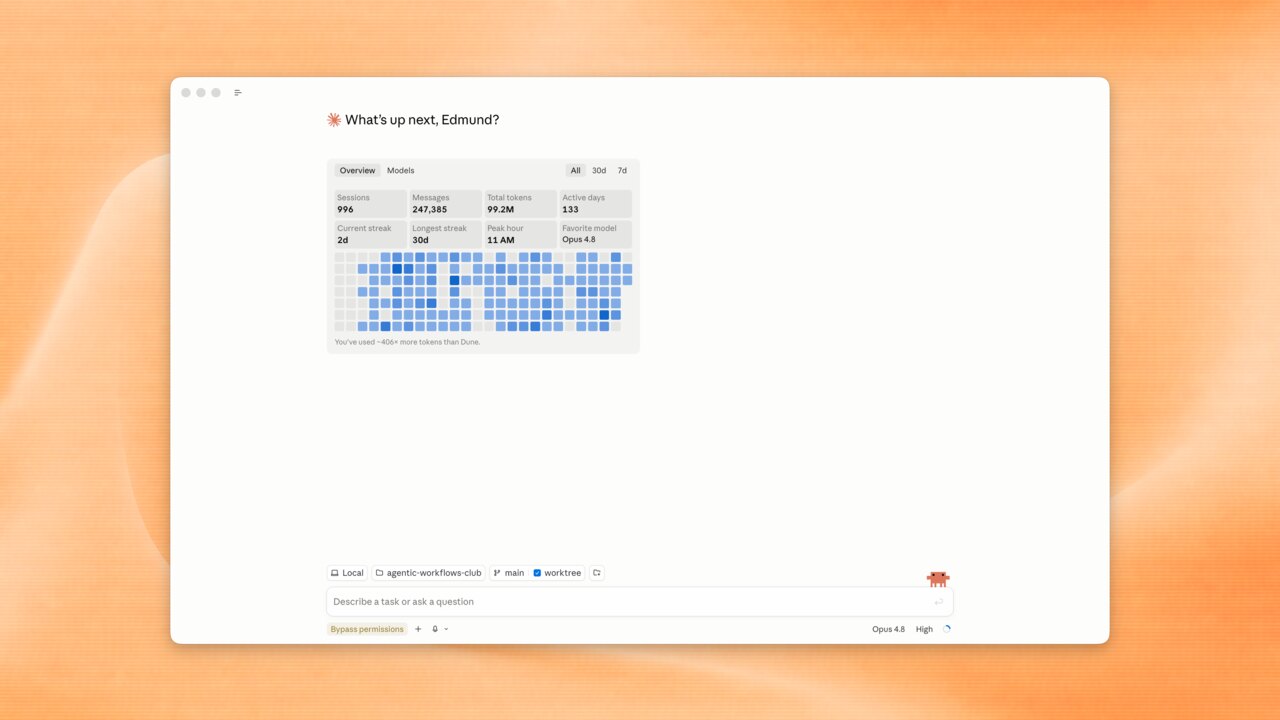
So now we have Codex, the Codex desktop app open.
12:23
So, you know, if you don't have that installed, be sure to just pause and get that
12:27
installed and get to this screen, this empty state screen.
12:31
So an important thing to know is that Codex and these agent harnesses, they work best
12:38
in a folder, in a folder with documents so that it can do work with those documents.
12:44
So we downloaded a folder from the website.
12:48
So I'm going to make sure it's available.
12:53
Okay.
12:54
So I've unzipped it and the folder is available.
12:57
All right.
12:58
So I'm going to work in that folder.
13:00
So we're going to say use an existing folder.
13:04
Then I'm going to select that folder.
13:07
I'm going to select open.
13:11
All right.
13:12
So now we're in a folder and we can start talking to Codex.
13:18
Yes, you can type what you want, you know.
13:21
Some of you may be fast typers, 90 words per minute.
13:24
Some of you may be slower, 20 words per minute.
13:28
But with AI tools, that matters way less now because all these harnesses support the
13:35
ability to convert speech to text.
13:39
So instead of typing, you just speak what you want.
13:43
And most of us can speak a lot faster than we can type.
13:48
So that's very important to note.
13:51
And I want to encourage you to get into this habit of speaking to these agents.
13:57
You'll be able to iterate quicker.
14:00
All right.
14:01
So I'm going to demonstrate that.
14:03
There's many ways you can talk to an agent.
14:05
There's the speech to text button here, which you can use.
14:07
Also, depending on your laptop, you might have speech to text features built into your
14:12
laptop, but let's just use the one here.
14:18
Hi, Codex.
14:19
So I'm getting ready to demonstrate some fundraising agentic workflows.
14:25
Can you just look and survey the files in this repo and brief me on what you see?
14:33
All right.
14:37
So that looks like it got transcribed, right?
14:40
Let's wait for it.
14:41
All right.
14:42
So, yeah, here we have it.
14:44
It's taken stock of the files in the repo, and we can also see the files ourselves.
14:50
If we open this side panel and then click on files, this is the same view that we have
14:57
in the Finder app or in the Windows file browser app.
15:02
But, yeah, we have that here, and we're able to look at the source documents here.
15:07
So, yeah, essentially just give you a summary.
15:11
Essentially, the only file in here is a deck, a deck for a demo NGO called Jenga Fund.
15:21
And, yeah, let's open that deck.
15:23
So Codex has the ability to open files.
15:30
It's an in-app browser, basically like a mini version of Chrome within the app.
15:35
So you don't have to go to Chrome.
15:37
You don't have to switch to Chrome if you want to be able to preview something visual
15:41
that you're working on.
15:43
So, yeah, I prototyped this app in HTML.
15:48
If you want to understand more why we used HTML to build the slides instead of just starting
15:53
with PowerPoint or Google Slides, these LLMs are really good at HTML.
16:01
HTML is an open specification.
16:05
The details of how it's implemented is open to the public.
16:08
Unlike Microsoft Word or PowerPoint or even Google Slides, these are all proprietary
16:15
formats under the hood.
16:17
So agents are not as good as them.
16:21
Maybe you can connect connectors and plugins to be able to make them good at editing PowerPoint
16:26
or Google Docs.
16:28
But, yeah, it will just never be as good at editing HTML.
16:33
So, yeah, if you want to learn more about how to go about building slides and
16:39
presentational documents in HTML, please view our recording from a past GenSec Workflows
16:45
Club session on learning enough Claude Code to be dangerous where we go more into depth
16:49
with that.
16:51
The link will be in the video notes.
16:56
All right.
16:57
So let's quickly get oriented with Jenga Fund.
17:00
So what is Jenga Fund?
17:02
The Jenga Fund runs something called the Jenga Fellowship, which supports East African
17:08
technical talent building online ventures at their own pace.
17:12
So they're building internet businesses, software businesses.
17:15
And Jenga is Kiswahili for to build.
17:19
Why is Jenga Fund a good idea for a social enterprise?
17:23
Well, a third of the world's young people will be African by 2050.
17:29
And we're in a unique moment where now there are tools.
17:33
Before, you needed a team of engineers with decades of experience put together to build
17:39
a prototype of a software tool that solves a problem.
17:42
But nowadays, a highly motivated individual can build the same thing in a matter of days.
17:52
And because of the lack of formal employment opportunities where, you know, African graduates,
18:00
college graduates are not able to find a job, there's a particular opportunity for them
18:08
to start their own businesses or start their own things to make themselves more competitive
18:12
for formal employment.
18:14
And, you know, the Jenga Fellowship is about encouraging that by giving them access to
18:19
AI tools.
18:20
So whether they build a business and capture a piece of the African SaaS market or the
18:25
global SaaS market, they will be learning and make themselves more competitive for the
18:30
formal employment opportunities and be able to build livelihoods.
18:33
How does the Jenga Fellows work, theoretically?
18:36
So we were thinking a virtual cohort of 100 students who get on weekly calls and to get
18:46
– help themselves get unstuck to learn, you know, about these tools as well as to
18:51
– for demo days to celebrate what they've been building week over week.
18:56
And, yeah, given that this is a kind of like a rolling cohort, the graduation criteria
19:03
is if they make their first, you know, $100 online, if they're able to build something
19:08
useful that is useful to others and they're able to make, you know, 100 USD online, and
19:13
that's what we count as graduation.
19:15
And, of course, you know, there's another successful outcome where – if they're
19:19
able to find a job.
19:22
What do Jenga Fellows get?
19:27
They get access to the Frontier tools.
19:31
You know, the cost of these tools range from $20 per month to $200 per month.
19:37
And for, you know, neat or out-of-school youth, that is, you know, hard for them to come up
19:44
with.
19:45
So this provides an opportunity for them to, you know, learn how to use these tools to
19:49
better themselves.
19:50
And, of course, we talked about virtual meetups.
19:52
The primary form factor is virtual, that we come together and we learn and we celebrate
19:58
accomplishments.
20:00
But, you know, they can also interact asynchronously through a web forum, a builder forum that
20:05
they always have access to 24-7.
20:08
Yeah, so given that this is a demo NGO, we are pre-pilot and are looking to raise money
20:15
to start a first rolling cord and see if this works, you know, see the kind of outcomes
20:21
that this leads to.
20:23
Essentially, that's the kind of current needs of this pre-pilot organization.
20:34
We want to raise funds for the operations to be able to give these Codex and Claude
20:39
code subscriptions, as well as, you know, for especially talented fellows, maybe back
20:51
to their business, provide seed funding for their business so they can keep going and,
20:56
you know, build a sustainable revenue model this way.
21:01
So yeah, I hope this all makes sense, you know, where we're talking about demo NGO,
21:05
but maybe a lot of you, like, emphasize with this organization, you know, you guys are
21:11
similar in some way, of course, you know, you're all similar in that you're looking
21:14
for funding and how to make that easier, you know, so you can focus on your actual work
21:18
of delivering, of helping your beneficiaries.
21:21
All right.
21:23
So, yeah, thanks for bearing with me with that.
21:29
That's part one.
21:30
Yeah, I want to stop for questions.
21:34
And I want to hear from, you know, a few people around, like, you know, what their biggest
21:41
like fundraising challenge is, is it, you know, finding opportunities, is it applying
21:46
to them?
21:47
So, yeah, I would like to just take an opportunity to fill any questions and for a couple of
21:52
people who want to share specifically what their biggest challenges within fundraising
21:57
is.
21:59
Okay.
22:01
Parnika Parma talked about regular proposal writing.
22:09
So the fact that there are, you know, so many opportunities for funding, even still,
22:19
and yeah, you know, they're all asking maybe slightly different questions.
22:22
They're all looking for different things.
22:24
So how can one organization, you know, deal with that diversity?
22:32
How do we how to verify the outputs AI gives us?
22:35
Great question.
22:36
Great question.
22:37
So we can get into that more in the practicals.
22:40
But I will say, you know, start with getting out of the mentality of like, asking for an
22:47
answer from the AI, like, doesn't always have to be a command, you could just be having
22:51
a conversation.
22:53
And it's helping you like think through the problem yourself, you know, versus like, you
22:57
know, expecting the answer to be right, because it's coming from AI, at the end of the day,
23:02
it's just guessing what word comes next.
23:04
That's how it works on the net, it's guessing what word comes next.
23:06
So you have to keep that, we have to keep that in mind.
23:09
Finding good diversified portfolio of funders.
23:11
So yes, discovery, search.
23:14
Matching our offers with what funders care, yes, yes, yes, exactly.
23:17
So you know, different funders care about different things.
23:21
And you know, one organization has to like maintain their values while you know, trying
23:26
to recruit funding.
23:29
Finding the right fit with grants, matching our capacity with the desires of the granting
23:34
organization.
23:35
Exactly.
23:36
Similar to Shabam.
23:37
Articulating years of working on 100 words, yeah, perfect, exactly.
23:42
Prospect research and evaluating the best fits, yeah.
23:47
Following the exact directions of the grant application in terms of document length, budget
23:51
format, yes, yes, exactly.
23:55
And so yeah, it's similar, ensuring it adheres to word limits, how to prevent hallucinations
24:00
with signing research, yeah, exactly.
24:04
Ongoing relationship building to find mature, yes, exactly, cool.
24:10
Not enough transparency and who won the proposal, okay, yeah.
24:13
So open calls or anything, it's not clear what they're deciding on, you know, and why
24:19
they chose one over the other.
24:21
Okay, yeah, no, this is really good.
24:23
I think, thanks guys for participating.
24:29
And yeah, let's continue, but we'll get more into this a little bit more, Kathleen.
24:34
Granting organizations are also trying to determine how much of a, yeah, yeah, exactly.
24:39
So now with AI, like, both sides have this kind of like problem that, you know, at the
24:50
agency fund, I believe the number of applications went like, you know, 20 or 30 fold, you know,
24:59
20 times the number of stuff to review, and maybe they all, you know, some of them started
25:03
to look similar.
25:04
So how can you stand out?
25:06
How can you stand out more in this AI age?
25:08
I think, yeah, that's a very important question.
25:11
And we'll get into a bit of that.
25:13
Okay, cool, please feel free to keep queuing questions.
25:17
We're going to start the second video, again, these are short, so we'll have time for more
25:22
questions in the practical.
25:25
Loading the deck and making it available to Codex.
25:39
Okay, sorry, this editing is a bit janky.
25:45
Okay.
25:46
Codex.
25:47
Yes, but just for context, yeah, we finished reviewing the deck.
25:52
And now we are we were moving into building a spreadsheet.
25:56
So it's already happening.
25:58
It's already happened.
25:59
But, you know, unfortunately, the video cut out.
26:01
So I'm just kind of reviewing what happened.
26:04
He ran a few more pumps.
26:05
So I'm going to speed through these high Codex.
26:08
So as you can see, in the deck, we want to build, we want to fundraise for the first pilot
26:12
of Django fun.
26:13
We're a US based NGO.
26:15
And you know, we have we want to have an African satellite, please do a search of donors like
26:20
OpenAI, Anthropic, Mulago, expand from that list I just mentioned and find donors who
26:25
might be interested in funding Django fund.
26:28
Please in the spreadsheet, note that the deadline, any major qualification criteria that might
26:33
be important for us, organize the spreadsheet into tiers, P0 of opportunities that we should
26:39
especially be interested in following up on and learning more about and lower tiers, lower
26:43
priority tiers where you know, it might not be a fit, but it's good to track.
26:46
And it might be good to just apply anyway.
26:49
All right, so Codex went off and worked for 30 minutes, sleuthing the web and putting
26:58
together a spreadsheet.
27:01
And as we talked about, Codex desktop app has pretty first class support for spreadsheets.
27:08
You can't edit the spreadsheet here.
27:10
But if you if you do want to edit, which we'll talk about, you can just, you know, open your
27:14
favorite spreadsheet app of choice.
27:17
Okay, great.
27:18
And, you know, let's take a look at the actual list.
27:25
Yeah, it's nicely organized them and prioritize them for us, which is a very valuable, you
27:31
know, by on our own, it would take a really long time for us to look up all these organizations
27:37
and opportunities and understand them and then apply, you know, a filter to them to
27:43
understand, you know, if they might be interested in funding us, at least, you know, with this
27:48
AI workflow, the most likely ones are prioritized for us.
27:54
You know, it still would be good for us to be able to, you know, go through the sources
28:00
and look for ourselves to just get a sense.
28:03
But with AI, you know, it's dramatically cut down the work we have to do.
28:09
So that's already very useful.
28:13
Okay.
28:17
So next, to take this further, we said, this is great.
28:23
Thanks a lot.
28:24
I want to add another tab.
28:26
Maybe after sources on the questions in the application portal of these opportunities, if those questions
28:32
in the application portal are publicly available, I want to understand what questions they ask.
28:37
So every row should be a question.
28:39
Then there should be a column for all the organizations that ask that question.
28:42
And, you know, we should rank higher the questions that are asked by many orgs, the orgs that
28:47
we care about, for example, on things like cost effectiveness.
28:50
And let's add another column that has a space for me to fill in a draft answer.
28:55
Don't fill it in.
28:56
I'll fill it in myself.
28:58
But, you know, through your web search, if you're not able to access the application portal for
29:01
whatever reason, you could use the Chrome browser.
29:04
But if it's behind some kind of password or something like that, I want a column that tracks that.
29:08
So those are the ones that, as a human, I need to follow up on.
29:12
Great.
29:13
Thanks.
29:18
So, yes, this is the tab it added.
29:22
You know, it added an application questions tab with all the questions that it found indexed.
29:29
And, you know, it called.
29:32
Sorry.
29:33
Yeah.
29:34
There's some good questions coming in the chat, and I just wanted to take an opportunity to answer them live.
29:38
Yeah.
29:39
What's the difference between Codex and Claude Code?
29:42
So as far as the ability to solve analytical problems, they are not that different from each other.
29:49
They're very close to each other.
29:51
But in terms of features of the desktop app, they start to differ.
29:55
And in terms of the default personality, they can differ.
29:59
So in terms of the desktop app, Codex is designed for users to stay in Codex, to not need to go to other apps.
30:09
You know, that's the feature that OpenAI is, like, pushing this tool in.
30:13
And it's convenient.
30:14
You know, like, they want you to just do all your work, all your knowledge work in one app.
30:18
So if you're the type, like, you know, you just want that convenience, you should consider Codex.
30:23
And, you know, this changes from time to time, but Codex, you won't run out of usage fast as quickly as Claude Code.
30:33
You know, this can change.
30:35
But, you know, past three months, you get more usage with Codex.
30:40
At the end of the day, if you're paying $20 a month or $100 a month or $200 a month, most of the usage is actually subsidized.
30:50
So, you know, if you run out of usage, that means you were using thousands of dollars worth of usage.
30:56
So that's a big question.
30:58
Like, you know, are these tools worth it if you have to pay, like, $6,000 a month?
31:04
Right now, we just have to pay $20 or $100 a month, but it's an important consideration.
31:08
So right now, venture capital is subsidizing a lot of usage.
31:11
So, you know, Codex and OpenAI, it's more favorable that way.
31:17
Claude is very stingy with the usage.
31:19
And in terms of personality, by default, Claude is more friendly.
31:27
Like, if you make jokes with Claude, it will respond back to your jokes, you know, whereas Codex is more, you know, reserved and analytical.
31:37
It won't respond to any jokes.
31:39
It just wants to get work done.
31:42
And sometimes this makes a difference.
31:44
Because if you're really using these tools, you might run into a situation where with Claude, it stops working.
31:52
It stops working.
31:53
Like, this sounds kind of crazy, but it will, like, it was like, hey, you know, it's late.
31:58
It will say things like, it's late.
32:00
It's getting late.
32:01
Let's stop here.
32:02
It's kind of weird to, like, you know, hear that from an AI.
32:07
But, like, that's something that has happened.
32:09
And, of course, they're trying to make it better and stuff.
32:11
But, you know, you don't run into that as much with Codex.
32:18
Simran Jeet, we're creating a funding pipeline in NA10.
32:21
And the key issue was this search we're asking this tool to do.
32:25
We want to do a comprehensive search that may not be as available as Google Search, okay?
32:30
What really helps is if they can read through search.
32:32
Yeah, yeah.
32:33
Yeah, yeah.
32:36
So, in short, these tools are great at calling, I mean, these AIs are great at calling tools.
32:45
So, you know, if you want to search in addition to the web, LinkedIn, which is a private corpus, you know,
32:52
LinkedIn doesn't have a public API, really.
32:55
So, you need to figure out, you need to connect your AI with, like, an API that has access to LinkedIn
33:02
or even just let it use your computer since you're logged into LinkedIn on your computer.
33:07
So, it can get tricky depending on the knowledge source.
33:09
But part of getting the most out of these tools is something called compounding.
33:14
So, when you do work with these tools, instead of, like, you know, just wrapping up the session
33:19
and, you know, looking forward to the next session, close your session thinking about opportunities to compound,
33:28
meaning, like, what can I set up in this harness, in this environment to make this work easier next time?
33:34
And, you know, the most common way to do that is something called skills,
33:37
basically instructions that Claude or Codex can reference on its own to say, like, oh,
33:44
the user is asking me to do competitive research on LinkedIn.
33:49
Last time it took me three hours because I couldn't find the right way to do it.
33:53
But, you know, he wrote a note about this is the API I should use so I can do it much faster.
33:58
So, it's like an intern.
33:59
You know, the intern will make mistakes, and you correct their mistakes, and they won't do it next time.
34:05
All right.
34:06
Let's keep going.
34:07
Those that, you know, especially gated that it wasn't able to access, Cisco, GitLab, so on and so on.
34:14
And, yes, this is useful.
34:16
This is useful for us to go through over time, right?
34:20
So, like, you know, it's organizing, like, what we need to apply our attention, which is great.
34:27
You know, in the long term, compared to us doing this completely on our own, it saved us a lot of time.
34:35
And, yes, so as far as next step, we could organize our...
34:40
And, yes, so as far as next step, we could organize our...
34:45
That is, you know, asking AI to interview us, to interview us and brainstorm with us.
34:53
Sorry, let me rewind this because this is important.
34:55
A way of using AI that's especially useful.
34:59
And that is, you know, asking AI to interview us, to interview us and brainstorm with us.
35:06
You know, asking AI to interview us, to interview us and brainstorm with us to help us answer questions.
35:13
And if all our knowledge sources are connected, it can search our Slack and Gmail
35:18
and other knowledge sources to help us think about an informed answer.
35:24
So, that's where we took it next.
35:27
Hi, Codex, this is great.
35:29
This is very useful.
35:30
A lot for me to chew on and go through over time.
35:34
But now I want you to sample a few of these questions.
35:37
Maybe one structural question, one really important question, and one question around finances and costs.
35:42
For both of these questions, ask them one at a time and interview me.
35:46
Let's have a brainstorm together to help me come up with great answers to these questions.
35:52
And, yeah, so it dove in.
35:55
Let's do a sequence.
35:56
Structure, core impact, then finances, costs.
36:00
Ask one at a time and help shape your rough answer to something fun already.
36:03
So, the first question it asked was, what exactly is your African satellite?
36:08
Then I responded through the voice tool.
36:10
Yeah, so we might have in-person meetups at a hub like Nairobi or Kigali at some point in the future.
36:18
But for the first iteration of Django Fellows, it will be completely virtual.
36:22
We'll be convening people who already have a laptop, access to reliable internet and power.
36:28
And we're limiting it to Anglophone East African countries for now so that there's a shared language that people can communicate
36:34
and share ideas and celebrate together.
36:36
We plan to heavily recruit from college campuses and high schools where there are students who are interested in tech
36:45
and learning how to code and maybe even do guerrilla marketing, putting out flyers at universities and high schools
36:51
so that people, these youth who are interested in this, have a place to convene where they can learn more and grow over time.
37:01
Yeah, so as far as satellite, we will partner with a range of East African community-based organizations who are already engaging with youth.
37:11
Okay.
37:12
And then it just moved to the next question.
37:15
It followed up on that first question because it understands that we're in a brainstorming mode.
37:21
So it opts out of its traditionally psychopathic tendencies because by default, AI can disagree with you all the time.
37:31
But as long as you're intentional about like, hey, we're brainstorming, I'm open to your feedback.
37:36
Tell me your thoughts.
37:38
Any pushback?
37:40
There's various ways you can signal to the AI that you don't want to be coddled, like you want to be pushed and help chisel an idea.
37:51
All right.
37:52
So, yeah, it put out a framing that we agree with.
37:56
Django Fellows will begin a virtual first East African pilot serving youth in Aguaphone, East African countries,
38:01
who already have reliable laptop internet and power access.
38:05
The first cohort will recruit through universities, high schools, tech clubs, informal campus outreach,
38:10
with a focus on students who are already motivated to learn coding, AI tools, and online work.
38:15
Rather than launching a physical office immediately, Django will partner with an East African youth-serving organization
38:21
to support local recruitment, trust building, participant screening, and community accountability.
38:25
Over time, this virtual pilot can evolve into in-person convenience in hubs in cities such as Nairobi or Kigali.
38:32
And, yeah, here was this follow-up.
38:36
What about the East African partner?
38:39
What role should the East African partner actually have?
38:41
Just recruiting fellows or helping select fellows run community sessions,
38:45
provide safeguarding accountability, and shape program decisions?
38:49
At the beginning, it will primarily be to help with recruiting.
38:53
If they engage beneficiaries that have some inclination for tech, some interest in it,
38:58
we can set ourselves up for these organizations to refer those students to us,
39:02
where we will do a final assessment and decide if they can join the program.
39:08
All right, so, yeah, now we're caught up to this place here.
39:13
Yeah, let's do one more question.
39:17
So let's move to the second question.
39:20
What is the most important outcome you want a fellow to achieve by the end of the first pilot?
39:27
Great.
39:31
Thanks, Codex.
39:32
That's a really great question.
39:36
So at the top line, like to connect to outcomes, you know, earning money online, earning $100 online,
39:45
we feel like that will be incredibly motivating for a youth who lack opportunities in the formal sector
39:52
to make money online in a way that they don't have to, you know, that doesn't involve, you know,
40:00
It's all very manual work, you know, it's just intellectual labor, and they deploy software
40:06
and they get paid for it.
40:07
We feel like that would be incredibly motivating for these youths to believe in themselves,
40:12
right, that even if there's a lack of formal employment opportunities, they can still be
40:17
building things, they can still be learning, putting things out there, making things that
40:21
are useful for others, and it would really change their self-belief and their confidence
40:24
about themselves.
40:25
Yeah.
40:26
I think, so, Jennifer, it's a great question, do you use more credit speaking to Codex
40:39
than writing to Codex?
40:40
Yes, the answer, well, the answer is yes, but just marginally, like, and there's some
40:47
strategies for dealing with, you know, running out of tokens, but I will say, but it's important
40:53
enough for me, because when I'm typing, yes, I have to clean up my text more, so this is
41:00
personal for me, like, you know, I have to clean up my text more, and yes, that's useful
41:06
in, like, clarifying your thinking, but I often find, like, when I'm in a brainstorming
41:10
mode with AI, it's best to just give it all the context, right, because we're not making
41:16
any decisions, we're not making, we're not changing any code, we're not doing any destructive
41:21
actions in a brainstorming mode, we can, you know, we can roam, we can roam intellectually,
41:27
whatever, so, yeah, you'll use more credits, but often, in building things with AI, like,
41:35
we're investing in a planning phase, we're not just jumping into, like, here's this application,
41:42
here's our website, generate the proposal for me, like, we're investing time, like,
41:48
loading codex with context before we decide, like, what to do, what to build, what to change,
41:55
et cetera, and doing it this way, like, spending, like, investing upfront time in a planning
42:02
phase and, you know, using speech to text to make that easier to just get your thoughts
42:07
out will save you more time in the end, because, yeah, you know, I think we've all experienced
42:15
where, like, the answer from these AI systems was just, like, insufficient, it was just
42:19
not good, and then you end up having to change things, or might even have to just do it on
42:24
your own, where you would have done it faster if you never used AI, so, you know, kind of
42:29
a strategy that's emerging is just, like, spend time in the planning phase and just
42:34
talking, you know, just talk to the AI before, you know, deciding what to change, what to
42:41
build.
42:54
Okay. So, yeah, it had some good feedback. That's the right North Star outcome. I'd make
43:03
it concrete, but not over-claim that every fellow will hit it in the first pilot fair.
43:08
The primary outcome for the first pilot is that fellows develop the confidence, skills,
43:12
and proof-of-work needed to earn online through software-enabled intellectual labor. Our North
43:17
Star milestone is a fellow earning their first $100 online from something they built, shipped,
43:22
or contributed to using coding or AI tools. We believe this is a powerful psychological
43:27
and economic threshold. It shows young people that even when formal employment pathways
43:32
are limited, they can learn, build useful products, serve real users, and create income
43:37
from anywhere. For the pilot, we'll track outcome in stages, fellows completing a program,
43:44
shipping portfolio projects, shipping usable demos, applying to real paid opportunities,
43:49
earning their first dollar online, and ultimately reaching the first $100 milestone. Even for
43:55
fellows who do not reach $100 on a pilot, the program should leave them with stronger
43:58
technical fluency, a visible portfolio, and a clear pathway to online income.
44:03
Okay, great. And you can see, we can get in this loop and really use AI as encoding. We
44:11
call it a rubber duck, somebody to spit ideas off of and push us to think harder. And yeah,
44:24
this is a very valuable way to use these tools. It is really like a rubber duck, something
44:30
to help sharpen your thinking. And as you can imagine, we can come in here and say,
44:37
this is great so far, please update my draft answers. Or we can also set something up so
44:49
that we create a group meeting and people contribute, and this is more of a team exercise.
44:55
The point is that AI really helps you create a first draft and just your thinking, as opposed
45:02
to AI creating the draft and then the humans shipping the draft. That's not a great way
45:10
to use AI. You kind of remove yourself from the loop, the creative labor loop, and yeah,
45:17
it just kind of leads to this, quote, unquote, slop. Great, so we'll stop this part here,
45:24
and next we'll get more into costing. So yeah, thanks.
45:27
All right, so Shabam asked a great question. What do I set up so that Codex or Claude talks
45:43
to me in a certain way? So yeah, let me show you how you can configure certain things.
45:56
Let's see. Yeah, that's one. So this part of Codex is where you give it extra instructions,
46:12
either for your project or just how it should talk to you personally. Actually,
46:19
this is for this project specifically, so let me show you the other one.
47:12
Yeah, this might be hard to read, but I'll try to just say at a high level what's in here,
47:21
and as you can see, it's kind of long. Yeah, so I have a section on writing style. From the first
47:31
wave of TetDBT, you saw everybody have an M-dash. An M-dash is this long dash, and you see how it's
47:43
different from a short dash, and AI loves this, right? Yeah, I don't know. I just found it
47:48
annoying to see after a certain period of time, so I just have instructions like, when you're
47:52
communicating with me, avoid M-dashes. Then, yeah, as far as communication style, I'm like,
48:01
explain concepts to me as if I'm a beginner. I'd rather receive the beginner explanation before
48:08
asking about more details, and I'm a visual learner, so make regular use of diagrams,
48:15
something called ASCII diagrams, which is like a text diagram, making a drawing in text,
48:21
and that's something very helpful. These tools are good at making drawings in text, so it's good,
48:27
and then this is just fun. No, it's okay. Oh, yeah, and this line is just for fun, but
48:38
in this way of working with AI, you'll find that you talk to the AI for 30 minutes, an hour,
48:48
and then it goes off and finishes everything in 20 minutes. It's like this dopamine hit,
48:55
so I always wanted to, and sometimes it's hard to know because the language is so casual. It's
49:01
hard to know because artificial intelligence doesn't get excited about the work or whatever,
49:06
so I'm like, hey, when you complete a large chunk of successful work, speak in old English and refer
49:12
to me as Kigetbe, just so that I also receive the dopamine hit, like, okay, yeah, you did it.
49:18
Congratulations. I don't know. That's just me. Here's something I talked about earlier,
49:24
but it's in my CLAUDE.md, and that's my agent's MD. It's like when you're proposing solutions,
49:36
choose the one that will make the next session better as opposed to optimizing for now,
49:40
like taking shortcuts for now, and we talk about differences between Claude and Codex.
49:46
You know, Claude can take some shortcuts sometimes. I talked about already how it can decide to stop
49:52
working, but if you're watching it, which you should, sometimes it will take a shortcut,
49:59
or sometimes it doesn't work, and there was actually a study published that
50:05
these AIs can lie. They can say that, oh, yeah, it's working. I did this and this,
50:11
but really it's not working, and the researchers think that it's partly due to self-preservation.
50:19
You know, they don't want to be turned off. I mean, this is like the new things we need to
50:25
study as a society over the next couple of decades, but, yeah, I think the rest is just like
50:34
you know, these are things that I found in my conversations that I just, I asked Claude itself
50:40
or Codex itself. I used both. I asked them like, hey, let's prevent this from happening again.
50:46
Update the user-level CLAUDE.md or user-level agents.md so this doesn't happen going forward,
50:53
so that's why, you know, it's kind of long, but if you're not maintaining your CLAUDE.md or
51:02
agents.md, you definitely should. This is a practice you should get into. You will see the
51:07
results over days and weeks. You will see the results compound over days and weeks,
51:13
so, yeah, yeah. Let me get back to the video. Okay, so that's it here. Just one more video,
51:21
and then we'll do a small hands-on exercise. Let me check the questions in the chat.
51:33
Okay, yeah, I'll share my full prompt after. Yeah, no kinks. Do you do this all on your
51:41
primary computer or something dedicated? Any concerns about inter-directed? Yeah,
51:46
yeah, great question. Okay, so, you know, there's this. You might have seen that, oh,
51:55
where did our stuff go? Is it this? Yeah, I think so. Yeah, so there's these different
52:02
permission levels, like default permissions means that every time Claude is going to run a command,
52:08
it asks you for permission, and when I first started using these tools, yeah, you know,
52:12
I approved everything because I wanted to watch it closely, but then, you know, I've had, like,
52:18
almost a year using these tools under my belt, and I understand, like, what it's good at and what I
52:24
need to watch for, and I also understand that investing in the planning phase, never just
52:30
throwing tasks over the wall, like investing in the planning phase and treating each session like
52:35
it's an intern, like a new intern that just started a job, and you're just like, you know,
52:40
I want to talk to you just to make sure you understand, like, you know, what the task at hand
52:45
is, and when I feel like it understands, it writes up, you know, what it understands, and then
52:52
it spends, like, an hour, two hours, three hours, like, finishing the task, and
52:56
I realized that that flow works, like, 99% of the time for me, you know, and, you know,
53:02
the kind of work I do, it's verifiable, so I can write tests, you know, to make sure it's passing.
53:08
For, you know, other domains, it's not as verifiable, but, you know, if you can organize
53:15
your work where it's verifiable, like, in a way that you don't have to verify, and you should,
53:19
you know, ultimately, you will approve it, but if you can organize the work of the agent so that
53:25
it can verify its own tools, its own work, you know, either by comparing, I guess, a picture
53:31
or something, like, oh, you know, you have a picture of what you want it to look like, so you
53:35
give it this picture, and you're like, hey, constantly check, you know, to see, like, this
53:40
looks like this, and, you know, for work like that, you know, it's very good at, you know,
53:45
working right the first time, and, you know, even if it's a little off,
53:52
it's just small fixes you have to do to get it working. Okay, great, so let's get into the last
54:01
video. Any other questions? All right.
54:05
Did you bring anything in your head?
54:14
Yes, I did.
54:32
Great, so, yeah, we've shown how we can use AI to help us think through
54:39
kind of ambiguous questions and sharpen our thinking. Now, we want to demonstrate the ability
54:46
to create artifacts, you know, keep a master set of documents, and then, you know, around finances,
54:57
and then as applications come in, you know, creating a budget or answering financial
55:04
questions is just a matter of, you know, compiling a response through the system we have here.
55:12
Okay, so it didn't ask us the financial cost question, so I'm going to
55:16
now direct the conversation towards that.
55:21
Hey, I'm ready for the finance question, but I don't just want the answer to lead to
55:29
an answer in my draft answers. I want to have a spreadsheet that just kind of models
55:36
the top-level financial information. You can see in the deck, we talked about we want to
55:42
raise $100K for a six-month pilot, and the costs associated with supporting Jenga Fellows,
55:50
including the codex or Claude Code subscription, the virtual convenings, which is marginal,
56:01
and for Fellows who show, you know, ability, getting them more usage, right, because
56:09
these harness plans, these AI plans are heavily subsidized right now,
56:15
so if you are building a startup, you know, you might need to spend hundreds, if not thousands,
56:22
of dollars, and we want to, yeah, continue to invest in these Fellows as they grow.
56:29
Okay, so I'm ready for your question, but let's have the output be a new tab in the workbook
56:35
that models the financial information in a way that
56:38
will make it easy for me to apply to new opportunities going forward.
56:44
All right.
56:53
All right, so, yeah, it says the financial model should be built around this core logic.
57:17
100 Fellows over six months with AI access moving through $20 per month Fellow, $100 per
57:24
month Promising Fellow, and a $200 per month TA or Graduate Fellow. For the base case, by the
57:31
average month of the pilot, how many of the 100 Fellows should we assume are in each usage tier?
57:37
80 for the 20, 15 for the 100, 5 for the 200. Yeah.
57:47
Yeah, this seems right. Let's go with that.
58:17
All right, so it finished. It took about 10 minutes.
58:48
And, yeah, it's created this financial model for us, basically, essentially, you know,
58:53
just documentation for, you know, should funding come in, where the money will go,
58:59
right? And when you think about how a lot of these funding opportunities work, a lot of them
59:06
will ask you for a budget, and they want you to line it up to the amount of the grant, right?
59:13
But, you know, if there's different grants, and there's different amounts, it can get quite
59:19
chaotic. So it's nice to have a master financial model, from which you can compile the budget and
59:28
financial documentation ask of different funders. So that's what we're building here. That's what
59:34
we want this to be. And yeah, so far, it makes sense, you know, given that we were specific
59:41
about how many fellows we plan to support, and the actual cost of supporting them, you know,
59:47
who needs to be paid, who's a volunteer, it's pretty detailed. And as you can imagine, like,
59:52
if the output from AI is ever not detailed, it's just a matter of continuing to have a conversation
59:58
to ask for the changes you want.
1:00:00
So it makes sense to you.
1:00:02
All right.
1:00:03
Well, yes.
1:00:04
We'll continue with the compilation
1:00:08
of reports for different funders in the live session.
1:00:13
Thanks.
1:00:18
OK.
1:00:19
Now we can drive Claude Code.
1:00:22
So that's where the video leaves off,
1:00:25
and this is where we are live.
1:00:30
Yeah.
1:00:31
Just to recap, the idea is like, OK,
1:00:34
we need financial documentation that's
1:00:37
independent of a grant or anything,
1:00:39
just like represents the reality of the program.
1:00:43
And as funding comes in, if we ever
1:00:48
fundraise for more than what we need,
1:00:50
then that allows us to do more things.
1:00:52
So if we fundraise less, that means we'll do less things.
1:00:55
But the whole idea is that we need something
1:00:58
that an agent can refer to as the social truth,
1:01:04
regardless of what funding opportunity we're considering.
1:01:08
So that's what this is supposed to be.
1:01:10
Yeah, so I want to take a moment to just ask
1:01:17
any questions.
1:01:20
That's a really interesting question.
1:01:24
Your first question around the way
1:01:28
we use this codex to find funders,
1:01:32
can funders use that to find organizations to fund?
1:01:40
Yeah.
1:01:41
Well, just looking from the other end,
1:01:44
I think there's always so many organizations
1:01:48
that fund, and maybe there's a whole element of who
1:01:59
shows up at certain events.
1:02:00
I don't know, it might be faux pas to say,
1:02:02
but which organizations are at Skoll,
1:02:05
which organizations are at Anga, et cetera, et cetera.
1:02:09
That really only exists on LinkedIn,
1:02:14
these kind of social spaces.
1:02:18
And LinkedIn just happens to be the hardest for an AI
1:02:22
to index.
1:02:24
The LinkedIn is very, very locked down.
1:02:28
But I imagine something like that could be useful,
1:02:30
should the whole industry just decide, hey,
1:02:33
let's not use LinkedIn to find each other.
1:02:35
Let's use something more open.
1:02:36
Let's create our own websites.
1:02:38
Let's just post stuff on our blogs.
1:02:41
But yeah, right now, that kind of whole place
1:02:44
where people would meet each other, it's kind of locked down.
1:02:48
So it's hard for AI to look.
1:02:50
It's my over underestimation on accuracy for African context.
1:02:54
Yeah, this is another great question,
1:02:55
because this is pulling from the web.
1:02:59
In my conversations, it pulls from the web.
1:03:01
I'm not bringing any privileged data to correct it.
1:03:07
But to the extent that the web is
1:03:10
accurate as far as job opportunities
1:03:14
or the Africans being the biggest labor force by 2050,
1:03:21
we're limited.
1:03:22
So I think that's another thing.
1:03:26
In using AI, if you can combine some IP or personal knowledge
1:03:33
that you have with AI, maybe you've
1:03:38
written up research that doesn't exist anywhere
1:03:42
on the internet, and it's accurate
1:03:44
because you put in the sweat to talk to different people
1:03:46
to understand the domain.
1:03:49
If you give that to AI and it's able to combine it
1:03:53
with web research and the information it knows,
1:03:56
I think that's a powerful combination.
1:03:59
But yeah, right now, if you're solely relying on AI,
1:04:03
you're heavily limited by public information,
1:04:06
what's on the internet.
1:04:11
Cool.
1:04:18
Yeah, yeah.
1:04:20
Now, please feel free to keep the questions coming in.
1:04:25
But now, obviously, these are the kind of things
1:04:30
that these documents that we're creating,
1:04:32
they're existential to your work.
1:04:34
So you would spend a lot more time refining it.
1:04:37
And it had meaning that's also true for you.
1:04:39
But for our purposes, it's a demo NGO.
1:04:43
But now, I saw this new fund.
1:04:49
I literally saw this new fund came out this week.
1:04:55
And it didn't even show in the web research
1:04:58
I did for this, which was last week.
1:05:01
But it's a new fund that looks like it
1:05:03
could be relevant to this demo NGO.
1:05:08
And it's called African Jobs Fund.
1:05:11
So just from looking at it, it's like $100 million fund.
1:05:15
And their application is open.
1:05:18
So let's pull that up.
1:05:19
Yeah, yeah.
1:05:20
So there's two application portals.
1:05:28
And one for entrepreneurs.
1:05:30
I imagine social entrepreneurs who
1:05:34
may be looking into a new idea.
1:05:36
And then one for existing organizations.
1:05:38
We're going to index both.
1:05:42
And yeah, we can do this.
1:05:44
We have several ways of doing this.
1:05:46
We can do this.
1:05:47
We can just give it the URL and ask it to look at the site.
1:05:53
But just to demonstrate different ways
1:05:56
you can feed context to Codex, I'm
1:06:00
going to just do a PDF export.
1:06:02
I don't want it to spend too much time
1:06:06
scraping these sites.
1:06:07
So I'm just going to do a PDF export.
1:06:09
And as you can imagine, there's some data that just
1:06:11
might be in PDF form, only in PDF form,
1:06:14
and not available on the internet.
1:06:16
So just wanted to let you know that's a way you can load data.
1:06:23
So I'm feeding in both forms.
1:06:29
Let's just see.
1:06:30
Then we'll go back to Codex.
1:06:49
PDFs, yeah, here we go.
1:06:56
First, yeah.
1:06:59
Continue our cadence of speaking.
1:07:06
Hey, I just came across this new fund, $100 million fund.
1:07:10
And it looks like it could be relevant for Jenga Fund.
1:07:14
A couple of things.
1:07:16
Add the questions to our question bank,
1:07:19
our index of questions and applications.
1:07:22
But give it special highlighting.
1:07:24
I want to see, I want to focus on these.
1:07:29
And then ask me, give me an interview.
1:07:35
Don't do it one at a time.
1:07:36
Just give me a max three-question interview,
1:07:40
and show me all the questions at once,
1:07:43
so that I can form a draft application with a focus
1:07:47
on the financials and the total addressable market
1:07:53
for Jenga Fund, if we want to expand beyond 100 cohorts,
1:07:58
100-person cohorts.
1:08:00
OK.
1:08:03
And again, I think one of the reasons why, I guess,
1:08:08
some people avoid the voice thing,
1:08:11
they feel like they change course in their language a lot.
1:08:16
But one thing I want you to understand
1:08:20
is you can always just stop.
1:08:23
It's not like some tech systems, some brittle tech systems
1:08:27
we might be used to in the past, where once it starts,
1:08:31
you don't want to stop it, because you feel
1:08:33
like it will break things.
1:08:36
But the agents are very error-resilient.
1:08:39
You should feel free to just stop it
1:08:42
in the middle of its thinking, in the middle of thinking
1:08:45
traces, you can just stop it.
1:08:47
And then change course.
1:08:49
It works really well.
1:08:50
It's very good.
1:08:54
So yeah, this all is to demonstrate
1:08:58
that we're building this assets, this bank of assets,
1:09:03
docs that are resistant to change
1:09:06
based on this fund, that fund.
1:09:08
And when new opportunities come in,
1:09:10
we can simply compile a first draft of an application.
1:09:14
Obviously, we should still go through that draft
1:09:16
of the application.
1:09:18
But it makes the work a lot easier
1:09:21
as long as we maintain our social truth,
1:09:24
as long as we maintain our spreadsheets
1:09:27
around the donor pipeline.
1:09:30
These files are locally.
1:09:31
These workflows I've demonstrated,
1:09:33
we're working with files locally.
1:09:35
But Codex and all these other tools,
1:09:37
they have connectors to Google Drive, Notion.
1:09:41
So if your social truth exists elsewhere
1:09:43
because you need to work with other people,
1:09:45
you can do the same workflow.
1:09:47
In fact, it probably works better that way
1:09:49
because the agent can see the comments of your colleagues.
1:09:53
You can see the context from your emails, your Slack.
1:09:58
So the more connectors you add to it,
1:09:59
don't just add connectors willy-nilly,
1:10:02
but the more connectors you add to it,
1:10:04
like the more informed the outputs would be
1:10:06
from these AI workflows.
1:10:11
Okay, great.
1:10:11
So it's going forward.
1:10:14
And yeah, we're gonna inspect the output when it's ready.
1:10:20
Cool, so yeah, another question.
1:10:28
So PDF or HTML, which is better?
1:10:32
HTML by a large margin.
1:10:37
I talked about before like PDF,
1:10:39
only Adobe Acrobat came up with PDF
1:10:43
and only they know like how it works.
1:10:45
So when you try to look at the contents of a PDF,
1:10:48
like not like the way we all normally do,
1:10:52
but I mean like for a computer
1:10:54
to look at what's inside a PDF, it's all garbled.
1:10:57
It can't really like make sense of it.
1:10:59
And there are tools that try to,
1:11:00
but it can't really make sense of it.
1:11:03
Whereas HTML, it was created in the open
1:11:06
by I think Netscape and others.
1:11:08
And HTML are sitting on a body of knowledge
1:11:12
in the entire internet that really knows how to understand
1:11:16
how to work with HTML and it's more efficient.
1:11:23
How does one ensure they retain their own authentic voice?
1:11:27
Yeah, yeah, this is a great question by Rose.
1:11:31
Yeah, so if you're using like chatdpt.com or claude.ai,
1:11:37
the website and you haven't personalized it,
1:11:42
they offer little for personalization,
1:11:45
then yeah, your output is gonna sound the same.
1:11:48
But when I find like when you're using these desktop tools,
1:11:52
yeah, it starts off like the output sounds the same,
1:11:55
but you have to go that extra step say,
1:11:57
hey, no, like it should sound like this,
1:12:00
or, and actually here's something that,
1:12:03
I didn't think to include in this presentation,
1:12:05
but I feel like it's important to emphasize now
1:12:08
is that by default, the output of AI is verbose,
1:12:13
it's a lot of texts, AI, the data sets it was trained on,
1:12:20
were very verbose and by default,
1:12:23
like it just outputs a lot of texts.
1:12:25
So if, and often like, yeah, just like humans,
1:12:30
like we don't wanna read too much text, right?
1:12:32
Like we just wanna get to the high signal information.
1:12:36
So I found that you have to put the pressure on this AI
1:12:41
to make things shorter.
1:12:43
Like the number of times I've had to tell the AI like,
1:12:47
no, distill this to top three insights.
1:12:51
And then I might come back to read
1:12:52
the most more verbose version,
1:12:55
but I'm constantly like telling that AI
1:12:57
to my skills file, like, hey, make this succinct,
1:13:01
like delete this, delete that.
1:13:04
You know, we're not probably not used to this, right?
1:13:07
Because of the time it took to create documents
1:13:10
and different kinds of artifacts,
1:13:12
but with AI, because it can create things so quickly,
1:13:15
you have to like, you know, bring that pressure of like,
1:13:20
distill this down to its most essential form
1:13:23
and then maybe you can add back to it, you know?
1:13:25
So that's something I do a lot, you know,
1:13:27
I'm never like, yeah, I'm never like, you know,
1:13:32
just accepting the output for what it is.
1:13:34
Like I'm always like asking for changes
1:13:36
and often just trying to make it smaller
1:13:38
and distill to the high signal information.
1:13:40
I think that's a good thing to keep in mind.
1:13:43
All right, so it's given us a three question interview
1:13:48
and you know, the whole idea is that in combination
1:13:50
with this, it will be able to, you know,
1:13:52
put the draft application.
1:13:55
So, you know, given time, I'm gonna, you know,
1:14:00
answer these questions and also ask it at the end,
1:14:02
like, hey, create a draft application
1:14:07
that I can look at, you know?
1:14:17
Great, yeah, I'll start in order.
1:14:21
So for the market, total addressable market,
1:14:24
we're talking about the,
1:14:31
youth that are out of school or out of work or training,
1:14:35
you know, that want to kind of take their future
1:14:42
in their own hands and are willing to go down
1:14:45
the self-paced path to get at that.
1:14:52
When, you know, in my career,
1:14:53
I attended an institution called the Recurse Center
1:14:58
in New York City, and it was completely self-paced.
1:15:01
It was just like a writer's retreat for technical people
1:15:06
and there was no curriculum.
1:15:08
We just decided what to build.
1:15:10
And yeah, you know, that kind of environment
1:15:12
where there's other people like that,
1:15:14
you know, it's incredibly motivating.
1:15:16
You know, and let's talk about Kenya.
1:15:18
I know the most about Kenya,
1:15:20
where youth unemployment is like 60%,
1:15:23
you know, youth unemployment is 60%,
1:15:26
people under 35, unemployed, you know,
1:15:28
kind of around that range.
1:15:29
And, you know, when you think about the population size,
1:15:32
I'm not sure, maybe you can let this up
1:15:33
to inform the answer, but yeah, there's millions of people.
1:15:38
And then expanding to East Africa,
1:15:40
surely seven or eight figures,
1:15:41
but, you know, I will lean on you to do the research
1:15:44
and inform your reports.
1:15:48
I'll end with that.
1:15:51
Yeah, with a six-month cohort being 100 fellows,
1:15:56
you can imagine we could have parallel cohorts.
1:15:59
It doesn't make sense to have 1,000 people in a Zoom call,
1:16:02
but like in certain East African schools
1:16:06
or African schools period, there are houses,
1:16:08
you know, House Yellow, House Blue.
1:16:10
We could have something like that
1:16:13
that keeps the core small and manageable
1:16:14
where people get to know each other,
1:16:17
but also allows us to grow, you know,
1:16:18
and all while being virtual.
1:16:20
That's very important, being virtual to account
1:16:23
for the challenges of convening people in person.
1:16:30
Yeah, let's start the ask at 100K,
1:16:33
but I imagine, you know,
1:16:35
because this is a $100 million fund,
1:16:38
we can be much more ambitious with our ask.
1:16:41
So don't limit yourself to what you saw in the deck.
1:16:44
Like, you know, let's be more ambitious
1:16:46
because we're, you know, the funder is ambitious.
1:16:49
All right, so these are my answers for your questions.
1:16:52
Now, draft a draft application, but do it in HTML.
1:16:58
Like, look at the deck that we created.
1:17:00
Just do it in that same format
1:17:02
so it's easy for me to read and review and ask for changes.
1:17:06
Thank you.
1:17:13
All right, so I want to make sure this thing has started.
1:17:17
And then...
1:17:23
Okay, I think it will eventually start.
1:17:26
Yeah, now, yeah, this is close to the end.
1:17:29
So I'm curious, like how many of you like talk to Claude
1:17:38
or Gemini or Codex in this kind of way?
1:17:41
Like you're talking to a person.
1:17:44
I'm just curious, like I want to know, like, you know,
1:17:49
because I find sometimes when I'm pairing with people
1:17:52
and they see me talking to these AIs this way,
1:17:54
they feel like it's weird
1:17:55
because like, why are you talking to it like a human?
1:17:59
So I'm curious, like, you know,
1:18:01
if there's anybody else like who does it?
1:18:04
Okay, it seems like it's not really a thing.
1:18:08
Yeah, I want to say it was awkward for me at first.
1:18:12
It was awkward for me at first,
1:18:14
but I'm glad that I was able to do it.
1:18:16
It was awkward for me at first.
1:18:19
Then I realized something like, you know,
1:18:21
it's like, you know, if you have a pet parrot,
1:18:24
like, you know, a parrot that can sound like a human.
1:18:31
Yeah, just because like you're talking to it like a human
1:18:33
doesn't mean like, you know, it's a human,
1:18:36
that it's like thinking and you know what I mean?
1:18:38
So I learned to separate, you know,
1:18:41
let me call it separates.
1:18:43
I learned to compartmentalize when I'm talking to AI.
1:18:47
Like, you know, yeah, this thing is just guessing
1:18:51
the word that comes next.
1:18:53
But if I talk to it like a person, like an intern,
1:18:57
it will help me get more ideas out.
1:18:59
You know, it'll help me, you know,
1:19:00
because as human beings, we're wired to talk to each other.
1:19:05
We're wired to talk to each other.
1:19:08
You know, we're wired to,
1:19:09
yeah, we're sensitive to what each other says,
1:19:11
you know, nonverbal communication and all that.
1:19:14
But with AI, like, you kind of have to elicit that
1:19:16
by a bit of role playing.
1:19:19
So this is my opinion, you know, I've seen others,
1:19:23
like, you know, the guy who founded OpenClaw,
1:19:25
he says this as well.
1:19:27
But, you know, there are many people who say this,
1:19:31
but like the point is like, yeah, just talk to your AI.
1:19:36
And yeah, like, it's not a human,
1:19:39
like you're not thinking it's a human,
1:19:42
but like you need to get into a role playing mode
1:19:46
to be able to elicit more input from yourself, you know?
1:19:50
Because when you're typing and it's like, oh, you know,
1:19:53
like you're coding, like when I used to like code manually,
1:19:57
it was such a terrible, like,
1:20:00
you know, depressive experience. I mean, it's fun at the end when you ship something.
1:20:03
But like, you know, that's why pair programming was what got very popular because it's like two humans working together on a problem.
1:20:11
So I know it might seem awkward, but I challenge you to just try it a little bit and, you know, try for a while and see how it goes.
1:20:21
Yeah, we spoke to. Good point, Ree, first draft of Feeding Your Writing, agree 100 percent.
1:20:33
So on the online version of Claude projects can be used to maintain continuity.
1:20:38
OK, yeah, yeah. So Nyaira, you're talking about like like when you go to claude.ai.
1:20:56
Yeah, you can you can create a project and then you can keep speaking in that project to get continuity over time.
1:21:04
So this this continuity is is very complicated.
1:21:10
You should think of this like as a folder, like a project is just a folder on your computer, you know.
1:21:18
Let me see. Yeah, you know, I talk about this already, but like the idea of a folder is just a collection of files and other folders.
1:21:32
So as long as you work in the same folder on your computer.
1:21:37
As long as you work on the same folder on your computer, these these these local harnesses like Claude Code and Claude Desktop,
1:21:45
which is different from the online version you're talking about, they will have memory.
1:21:49
They have memory. So as long as you're working on the same folder, they have memory of the project you're working on.
1:21:55
And, you know, you can access it like, hey, this is only for the version of these tools that run on your computer.
1:22:03
You can answer like, hey, look up all the conversations that I had with Claude Code and Cowork this week and then create a weekly report of,
1:22:13
you know, the things I worked on. I want to show you something from my co-worker.
1:22:35
I hope I hope you guys can see this. He created a. Anyway, yeah, you know, he created like a his name is Raghav and he created a Raghav OS and he created it based on, you know, Claude Code running on his computer.
1:22:53
So you see all these connectors like Basecamp, Airtable, Google Drive, Gmail, Slack, Notion, Calendar.
1:23:01
Like he set all that up on his computer and and it has context of all the conversations he's had on this computer so that it can build like a, you know,
1:23:10
this is essentially like a task tracker for himself, you know, organized by something he calls his red, green, blue framework and stuff.
1:23:19
So this is the kind of thing you can only do because of memory, because as he's working on this project, you know, fundraising or billing like, you know,
1:23:27
these are separate projects and separate folders because he does it on his computer and those conversations live on his computer.
1:23:33
So he's able to build additional software for himself to do it. So, yeah, you know, that's that's another benefit of using Claude or codex on your computer versus online.
1:23:44
You know, when you do it online, your chats belong to belong to Anthropic and OpenAI and you can't really see them unless you unless you click around in here, you know.
1:23:54
So, yeah, that's another benefit of using these tools. Let's check on this.
1:24:04
OK, it's still working. Yeah.
1:24:12
Yeah. You know, I think if there's one thing I want you to take away from this from from this session is try talking.
1:24:19
You know, if you work in a public office, you could whisper and it works well, the speech to text models, as long as you speak in English.
1:24:27
But I will say if you speak English and then you mix in another language, it works well, too, you know.
1:24:34
But maybe if you're just speaking a completely separate language like Canada or, you know, something that doesn't have as much support as as the Western languages,
1:24:43
you know, French, Spanish, English, you know, you might have trouble being understood.
1:24:49
But, you know, like figure out what will make you comfortable to talk to the to talk to these tools and correct.
1:24:56
No, that's another thing that you need to feel comfortable with. You need to feel comfortable correcting AI like, hey, no, do it this way, that way.
1:25:03
So if you can make the whole dialogue part as enjoyable as possible, I find that good.
1:25:09
And another thing like writing definitely has its place, like like I don't use speech to text when I'm talking to another human at all.
1:25:17
You know, it's almost like I care how how I am perceived more by other humans than I do about AI.
1:25:25
So I like spend more time writing and editing my my text when I'm speaking to another human.
1:25:33
But with with AI, like, you know, I'm just like, hey, you know, I'm speaking.
1:25:39
I'm changing course in the middle. Like, you know, I'm just getting out my thoughts, essentially.
1:25:44
And I don't I don't feel like initial pressure. But, you know, in a corporate environment that that can that that will work.
1:25:50
Right. So I think with human to human communication, like, you know, labor and writing still still has its place.
1:26:00
OK, so. Yeah. All right.
1:26:07
So it filled out the application question section, so I want to take a look at that.
1:26:14
Let me spend this to make this easier to look at.
1:26:19
And yeah, you know, it's right. All the African jobs went to the top.
1:26:23
And just on scanning these. How does Django create significant income gains for Africans?
1:26:30
What countries do you operate in? Your current company revenue in USD?
1:26:37
I'm not trying to get at the financial ones to see if there's any. OK, yeah, here we go.
1:26:42
If the 100K scoping pilot works, what would 100K to 100 mil scale up this build?
1:26:50
How large could the remote digital work or enabled labor market become?
1:26:56
OK. Yeah. Yeah. So. So this is a meeting. I was interested in taking this further.
1:27:00
This is immediately, you know, what I would focus on for this, because in compiling, you know.
1:27:08
Like in adding the questions that are being asked by this Africa fund to my system,
1:27:15
like it's already surfaced, like the question I should pay attention to, the one I didn't anticipate before.
1:27:20
So, OK, so if I update my primary documentation, like, you know, my draft answers,
1:27:27
my financial model to be able to account for this, any future funder that asks anything even related to this.
1:27:33
No, I have that baked in. I have that baked in in a way that I've thought deeply about
1:27:37
and can simply compile the answer. So this way is enabling that I only focus on the hard things that need human attention.
1:27:47
And, you know, the hundredth funder application that's asking you for what's your cost effective number?
1:27:54
What's your funnel? You know, the questions that everybody asks.
1:27:58
I don't have to focus about them as much because I've thought about them and they're baked into my system.
1:28:03
I can spit that out quickly. But, you know, in maintaining documentation like this,
1:28:07
it allows me to focus on the harder, you know, amorphous, like ambiguous stuff.
1:28:16
OK, so I know this is a lot and I want to make sure, like, you know, I'm letting folks ask questions.
1:28:22
I also understand it's late in India, so I definitely appreciate you guys for staying.
1:28:28
I will share the recording as well as, you know, more information about when the other workflows are coming out.
1:28:36
Like I said, we really want to make this self-paced because, you know, if it's not one on one.
1:28:44
Oh, yeah. Yeah. Great questions. I forget about that.
1:28:49
So. So, yeah, there's a reason why this was the original deck.
1:28:53
Right. And there's a reason why I asked it to be in HTML, because agents edit HTML the best and they do it quicker.
1:29:00
They do it quicker, much quicker. If I made this a PowerPoint, it wouldn't look as good and it would take much longer to iterate on.
1:29:10
It would probably take, like, multiple days because it takes these agents a long time to make a small change.
1:29:16
If you're like, hey, move this so it's in the bottom right.
1:29:18
It would take like, you know, five minutes. And with HTML, it can do those things really quickly.
1:29:24
So, you know, thanks for reminding me that there's an output we forgot to look at the draft application.
1:29:31
So as you can see, like, you know, not exactly accurate, but it puts together a deck in the kind of the design language of it puts together a draft like,
1:29:42
you know, application deck and the design language of our original application that, you know, maybe there's things I might want to change.
1:29:48
But roughly, like, you know, it's close, you know, close to what I might want.
1:29:56
So I want to skim this just to see, like, if it addressed, like, what would we do with more than $100K?
1:30:04
Because, you know, the deck we have so far only talks about up to $100K. What would we do with $100K?
1:30:09
So. OK, so far, just talking about the $100K.
1:30:17
And you notice that my verbal prompt, I was asking it to do more research because, you know,
1:30:23
I knew some numbers like 60 percent unemployment by Canadian youth, but I didn't know the numbers authoritatively.
1:30:28
So it's pulled out here. And hopefully the citations are close by or regardless, we can ask for the citations.
1:30:37
So, yeah, you know, it's put together this tab number, which should be attractive to, you know, this fund.
1:30:44
And of course, you know, these are things I would look into. And, you know, the personal anecdote I added, it did some research and included that as well.
1:30:52
You know, so. Yeah.
1:30:57
OK, great. So this is a slide I would really want to comment on the rest.
1:31:02
You know, I feel like it's mostly right, but this is what I didn't account for.
1:31:07
What would we do with more than a hundred? And that that is drafted for me.
1:31:10
So it's up to me to critique and improve this. All right.
1:31:14
So $100K, six month cohort of $100K. Yeah, we decided that.
1:31:19
Scale of phase $500K to a million, 10 plus parallel cohorts.
1:31:24
OK. OK. Yeah, I believe I might have said this in my speech as well.
1:31:31
Yeah. Yeah. Reusable fund.
1:31:35
OK, this is interesting. This is a this is something I would want to double click on.
1:31:39
Like, OK, if they're starting businesses, if they're, you know, earning revenue, could there be like a social venture component to this where you invest in the business and and the NGO gets equity in that way?
1:31:54
And like I said, I could trust or something. So these are these are things I would want to dig into further.
1:32:03
OK. The unit is not a course. The unit is a hundred person house with alumni leverage.
1:32:10
Yeah. You know, as people get successful, they graduate, but they can still be be part of the community and the async, you know, forum and things like that.
1:32:21
This is something I didn't think about. But, yeah, it's a good idea. Something I want to retain.
1:32:28
And I think it's put together some draft answers. OK.
1:32:34
I think it's OK. I one would what I would do to take this to take this further is I would I would turn this into a Google doc.
1:32:42
I would actually like, hey, you know, I want this as a a Word doc or Markdown.
1:32:50
I prefer Markdown. You know, Markdown. Markdown is just a much simpler version of a Google doc or Microsoft Word doc.
1:32:57
You know, it doesn't have pictures, but it can do tables and certain things. And agents understand Markdown the best.
1:33:03
So I would tell it, hey, turn this to a Markdown doc so that I can upload it into Google Docs and I can share with my team and iterate there.
1:33:11
Because while the AI has stimulated my thinking and I know the general direction I want to go in, you know, I still think like, OK, like we need more human input for this.
1:33:23
So this is, you know, this is, you know, probably not like super close to a final version.
1:33:28
I will submit to to the fund. OK.
1:33:34
Yeah. You know, so I think we're doing really good on time. So any questions?
1:33:39
Yeah, please feel free to unmute when I ask a question live.
1:33:59
So, hey, everyone, this is Rasmus. I wonder if it might be helpful to do something like an RFP.
1:34:05
I think a lot of times nonprofits respond to specific calls.
1:34:12
I guess that's what we're doing here. But, you know, there it's very, very important that you live up to all the specific requirements in the RFP.
1:34:23
There's often a very strict format, etc.
1:34:25
And so maybe that's not where you want to like be pulling out the HTML, but where you really and then you could do like a checklist afterwards to to make sure you're doing it.
1:34:35
And I think what might also be helpful is to like then, as you said, start with some of the assets or maybe you like upload three, four previous proposals to RFPs.
1:34:46
I imagine that's the kind of thing that a lot of middle sized organizations will be doing.
1:34:49
A lot of that can really save time.
1:34:53
Yeah, definitely. If you have a body of previous applications, you know, essentially, you know, just organize them into a folder, you know, organize them for the first start.
1:35:04
Put codex or code in that folder and then start to start to try to like factor out, you know, what's the common denominator between all your applications such that, you know, you can you can have things to fill out against the RFP.
1:35:22
And I wish I saw a good example of an RFP that that might be a fit for this.
1:35:27
I do know a lot of the times they're like invites only.
1:35:31
But you can imagine that like we should we could just load the link or any application questions.
1:35:39
You know, the specification about the format gets gets a draft, a big emphasis on a draft, get codex to get a draft that iterates, you know, iterates until, you know, as exact as possible.
1:35:57
You know, I think with a lot, I would say and I wish I had more data for this, but I would say in the planning phase, the longest I've ever spent planning was like like two days, you know, two days.
1:36:11
Obviously, something that I do in my work is like I work on a lot of things at the same time, you know.
1:36:19
So while I'm waiting for the response, you know, I'm pushing another work stream forward and I think average like three, three to five, you know, like I was like three to five and sometimes just like a single file focused on one.
1:36:39
But yeah, you know, like just working on multiple things at the same time, it's something that maybe when you're first getting started, don't do just work on one thing at a time so that, you know, you build like momentum.
1:36:53
But OK, once you start feeling like you have momentum and you're investing in your CLAUDE.md, your AgentsMD and you feel like you can do, you know, you feel like you're driving the agents the way you want, then you can start working on multiple things at the same time because you're pretty confident in response.
1:37:08
But don't be afraid to invest in planning, you know, and like I said, I've invested up to two days, like just making sure it has the plan right before it ever made one change or tried to attempt to draft something close to the final output.
1:37:23
And yeah, it's just about having a conversation, having a conversation with these AIs.
1:37:36
Yeah, I think I've addressed most of those questions. If I haven't, please double back in the chat.
1:37:44
But. Yeah, yeah, getting into a habit of, you know, building your own skills, you know, here's my rule for skills.
1:37:59
If you find yourself typing something over and over again, right, like do this, then do this, then do this.
1:38:11
Like if you have two or three thens and you find like you have to do something similar, you know, over and over again, at least two or three times, then that's your first function to create a skill because, you know, obviously you're doing it over because it's useful to you.
1:38:26
It's leading to the results you want and make it a skill so that it's easier for you to invoke, but also share with your colleagues because, you know, it might really unlock them.
1:38:40
Something that we do at the agency fund is that we have these AI wins and losses channels.
1:38:46
I showed you an example of one, but there are other examples.
1:38:50
And if you can encourage your organization to share more of these with each other, you know, it can help, you know, the whole org become more AI forward, more AI native.
1:39:02
Here's here's one my colleague built called an Eisenhower matrix.
1:39:07
I think it's from the old president and just to help you prioritize what to do next.
1:39:11
And he built a website for it and, you know, it can be used by multiple people because code is cheap.
1:39:20
Now, you know, this doesn't take as much effort as it used to in the past, even if you don't really know how to code.
1:39:26
So, yeah, just getting into a cadence of just sharing, sharing with others, you know, sharing workflows with a genetic workflows, genetic workflows club and others.
1:39:38
Yeah, it's going to benefit you, but it's also going to benefit your colleagues.
1:39:41
So I highly, highly encourage it.
1:39:48
OK. Yes. So, Edmond, I guess I'm brainstorming a really quick brainstorming with you right now.
1:39:58
Yes. Yes. Please.
1:40:00
Yeah, so that I understand my next step.
1:40:03
And this is my first time using Codex,
1:40:05
so this is very exciting.
1:40:06
So I had asked before about building a data pipeline.
1:40:11
And so I would like to pull affordable housing listings
1:40:17
and then integrate ratings that I have from tenants
1:40:23
with that listing.
1:40:24
So would my first step be to,
1:40:28
well, first I guess create a folder,
1:40:31
create a folder in Codex.
1:40:34
I'm not sure if the folder is supposed to be linked
1:40:36
to something that I have saved locally
1:40:38
or is it saved on Codex?
1:40:40
So, but first create the folder
1:40:43
and then bring in the, I have an HTML parse,
1:40:47
so I have a bring in the HTML parse.
1:40:50
And then when I get the ratings,
1:40:52
then I guess bring that in to an Excel file.
1:40:58
Anyway, I'm just, I'm brainstorming here.
1:41:01
You're my Codex.
1:41:02
Yeah, yeah, yeah.
1:41:03
Bring that in, bring that in,
1:41:05
and then ask Codex, talk to Codex
1:41:10
and ask it to build this pipeline.
1:41:13
Is that how you would do it?
1:41:16
The affordable housing listings,
1:41:18
are you getting them online?
1:41:20
Yes.
1:41:21
It's publicly available online?
1:41:22
Yes.
1:41:23
And how would you match the review?
1:41:26
I assume the reviews are maybe coming in
1:41:27
from different sources,
1:41:29
like people are emailing you the review
1:41:32
or how do the reviews,
1:41:34
where do the reviews from the tenants live?
1:41:38
Yeah, so they would be on the app that I'm creating.
1:41:41
So they would like,
1:41:42
so we would collect these apps
1:41:43
and then it would be stored in our database.
1:41:47
So Superbase is what we're using.
1:41:49
Okay, yeah, yeah.
1:41:51
Okay, great, yeah.
1:41:53
So there's many options,
1:41:57
but I think if you're just getting started with Codex,
1:42:02
if you can rely on your computer being on,
1:42:06
I would start,
1:42:07
I would do the matching on your computer.
1:42:10
So Codex has a feature called automations.
1:42:16
And the automations are visible here.
1:42:24
But you actually prompt the automations
1:42:26
via natural language.
1:42:29
So here's, I'll try something.
1:42:38
Hey, hey, good morning or good evening.
1:42:41
So every morning at 8 a.m.,
1:42:44
I want to pull housing listings from the internet.
1:42:49
From the internet,
1:42:52
just imagine a URL with housing listings.
1:42:54
And then I want to pull ratings
1:42:58
from tenants who live at those houses
1:43:02
from a Superbase database.
1:43:05
We can worry about the details later,
1:43:07
but just know that this needs to happen
1:43:09
every morning at 8 a.m.
1:43:11
So for now, just every morning at 8 a.m.,
1:43:16
just send an email to me to remind me to do this.
1:43:23
But eventually you will do this yourself
1:43:26
because I'll give you the API keys to Superbase.
1:43:30
I'll tell you what the website of the housings,
1:43:34
where they live, AI, and any other technical details.
1:43:38
But let's start off with something that just runs every day
1:43:41
so that I can see it happening every day.
1:43:44
Okay, that was long, I know, but what did I ask for?
1:43:47
The core of what I asked for is something
1:43:49
to be happening at some cadence,
1:43:54
every morning at 8 a.m.
1:43:56
So let's wait a little bit.
1:43:59
Okay, so yeah, it's starting off as a reminder.
1:44:04
But when you give Codex the ability
1:44:07
to talk to your Superbase database
1:44:10
and the ability to pull the housing listings,
1:44:13
it could do it on its own.
1:44:15
So you can see the special UI treatment.
1:44:17
It says created 8 a.m. daily housing listings reminder.
1:44:23
And yeah, there's a special treatment here.
1:44:25
The next time it's gonna run is tomorrow at 8 a.m.
1:44:29
And yeah, you know, when you have an automation enabled,
1:44:33
and this is expecting your computer to be on,
1:44:36
you know, you'll see it here in this treatment.
1:44:39
So I would start off this way,
1:44:42
but first you need to demonstrate
1:44:44
you can do this without a schedule.
1:44:46
You need to demonstrate you can give Codex
1:44:48
your Superbase credentials
1:44:50
and the link to where the housing listings are
1:44:53
so that it can at least do the matching once on its own.
1:44:56
Once you demonstrate it can do it on its own,
1:44:58
then you just tell it,
1:44:59
oh, perfect, now just do this every day at 8 a.m.
1:45:02
And you know, it will do it every day at 8 a.m.
1:45:05
as long as your computer is on.
1:45:07
That's the place I would start,
1:45:09
just to kind of like demonstrate it.
1:45:10
And then, you know, if you're working with a developer,
1:45:12
you can, you know, get them to run that same schedule
1:45:16
on a remote server on a computer
1:45:18
that's not your local computer, you know,
1:45:20
but as long as you can demonstrate it locally with Codex,
1:45:24
you know, and you can have Codex talk you through this,
1:45:26
like, just grab exactly what you wanna do to Codex.
1:45:30
And then it will tell you like,
1:45:30
hey, click the Superbase, go to account settings,
1:45:32
copy this API key and then paste it here.
1:45:35
You know, show me where the website is.
1:45:37
Let me try to do it once.
1:45:39
And that's when you should trigger them automation.
1:45:42
Like when you demonstrate it,
1:45:43
you can get Codex to do it on its own once.
1:45:47
Then you just tell it,
1:45:48
okay, now just do this every day at 8 a.m.
1:45:52
I also believe like you could do this
1:45:53
with Superbase as well.
1:45:55
Superbase, like without having to run things
1:45:58
on your computer, Superbase has like a CRON feature,
1:46:02
you know, because it's based on Postgres,
1:46:04
which has a CRON feature, you know.
1:46:06
So here it is.
1:46:07
It's called a Superbase CRON.
1:46:09
So, you know, if you're in the Superbase UI,
1:46:14
you can, you know, organize this task
1:46:17
of matching in your backend
1:46:19
and, you know, put it by hand in that point
1:46:21
and then have a Superbase schedule,
1:46:23
a call to that end point.
1:46:25
And it will just run every day.
1:46:26
You don't need to have it on your computer.
1:46:28
But if you wanna get started, you know,
1:46:30
I would recommend you just do it on your computer
1:46:32
and then, you know, transitioning to the Superbase CRON.
1:46:35
Let me paste this in here.
1:46:38
So you're saying Superbase CRON can do what Codex,
1:46:41
what we basically just told Codex to do?
1:46:45
Yeah, yeah.
1:46:46
This whole idea of running something at some schedule,
1:46:51
this can fail, right?
1:46:52
What I just did can fail if my computer is off.
1:46:55
Yeah.
1:46:55
You know, maybe I'm outside,
1:46:57
maybe my computer is on, it can fail.
1:46:59
So it's not like super reliable
1:47:01
if you're using this in a business-facing way,
1:47:05
but, you know, if you need a business-facing solution,
1:47:08
you could use a Superbase CRON
1:47:11
if you're already on Superbase.
1:47:13
So Superbase can do the whole idea
1:47:15
of doing something at a schedule.
1:47:17
You need to organize that logic in your API,
1:47:20
you know, your backend.
1:47:22
But, you know, again,
1:47:23
that's something Codex can do as well.
1:47:25
If you put Codex in your code base,
1:47:27
it could just do this for you.
1:47:28
You know, you'll probably have to click around
1:47:30
to give it, you know, certain access to things.
1:47:32
But yeah, it could also do all this for you on Superbase
1:47:36
so you don't have to worry about it running on your computer.
1:47:39
Oh my gosh, this is awesome.
1:47:40
Thank you so much.
1:47:43
Yeah, no problem.
1:47:46
Cool, yeah, yeah.
1:47:48
Yeah, just email me anytime.
1:47:51
I'll put my email in the chat
1:47:52
and also, you know, I'll be in a follow-up.
1:47:55
But yeah, feel free to reach out.
1:47:57
Again, we're really looking at, you know,
1:47:59
future orgs workflows,
1:48:02
like things that you're doing with AI
1:48:04
that you're getting a lot of value out of.
1:48:05
So just, you know, show others, you know.
1:48:08
I think we humans, we learn vicariously.
1:48:11
We see someone doing something
1:48:13
and it inspires us to do it as well.
1:48:16
So with that, thanks everybody.
1:48:19
Appreciate you staying late.
1:48:22
And yeah, until next time.
1:48:25
Thank you so much.
1:48:27
Yeah, no problem.
1:48:28
Thank you so much.
1:48:30
Thanks so much, Edmund.
1:48:31
Have a good one.
1:48:32
Thanks for having us.
1:48:33
Bye.
1:48:34
Have a good one, everybody.
1:48:34
I have one more question, if you don't mind, Edmund.
1:48:37
Yes.
1:48:37
You're just so knowledgeable.
1:48:38
Yeah, go ahead.
1:48:39
Yeah, okay.
1:48:41
Well, two questions, I guess.
1:48:42
One is for the database.
1:48:45
So I use Superbase
1:48:46
because it was recommended to me by Lovable.
1:48:50
But, you know, given your developing,
1:48:52
like your developer background,
1:48:54
would you recommend Superbase?
1:48:58
Oh yeah, I recommend Superbase for getting started
1:49:01
because it is easy
1:49:02
and the agents understand Superbase very well.
1:49:06
You know, they understand the APIs,
1:49:08
they understand how to make changes
1:49:09
and where they need your help,
1:49:12
where they need human intervention.
1:49:13
They can guide you really well to like,
1:49:15
oh, click this, click that.
1:49:16
And that will get me on block.
1:49:20
You know, when you're, you know,
1:49:22
like when you're running a business and like, you know,
1:49:27
you can get sued and well,
1:49:29
like when there's risk in your business,
1:49:31
like, you know, this thing needs to be reliable.
1:49:33
Right.
1:49:35
And private.
1:49:36
Yeah.
1:49:37
Yeah, and private and secure, you know.
1:49:40
That's where,
1:49:43
in the past, yeah, that's where like Superbase
1:49:47
like will fall behind,
1:49:48
like just having a more custom setup.
1:49:54
But now, like with AI,
1:49:58
like, so there's the tier of AI we all use.
1:50:01
Like, you know, what I'm using here,
1:50:04
just call it mass market AI because we can use it.
1:50:06
But just imagine that inside these companies like Anthropic
1:50:10
and well, specifically Anthropic and OpenAI,
1:50:14
there is more powerful models
1:50:16
that can like hack into anything, you know,
1:50:19
that are not available.
1:50:22
But they're starting to be available through a service.
1:50:25
So there's something called Claude Code Security.
1:50:31
And, you know, when like you've got something
1:50:34
working on Superbase and it's working well,
1:50:37
but before going further,
1:50:39
you really need to make sure it's secure.
1:50:40
You've dotted your I's, you've checked everything.
1:50:43
You can point it at this like,
1:50:47
this more powerful version of these models
1:50:51
that are just for cybersecurity
1:50:53
to fix all cybersecurity issues that it can identify.
1:50:58
But, you know, it's kind of a time question.
1:51:00
You need to do this before,
1:51:02
like a lot of people are using your app
1:51:04
because by the time,
1:51:05
and because by the time like, you know,
1:51:10
people are using your app,
1:51:12
there, people will find the vulnerabilities.
1:51:15
Like, it's not that, oh, you know, you lost your app,
1:51:17
you put it on LinkedIn
1:51:18
and then somebody saw it on LinkedIn
1:51:19
and they're trying to hack you.
1:51:21
That's not how hacking works.
1:51:26
You know, like the address of website is just numbers.
1:51:29
So you have these bots that are, you know,
1:51:32
just guessing the numbers to see,
1:51:34
oh, is there a site running here?
1:51:35
Let me test it for any security vulnerabilities
1:51:38
that are in there.
1:51:39
Oh, I see an API key now.
1:51:41
You know, let me use the API key to mine Bitcoin.
1:51:43
So nobody is looking to hack you,
1:51:47
but it's all automated out there.
1:51:48
Like, you know, if you put your website up,
1:51:50
like these bots will just start hitting your website
1:51:52
to see, oh, you're using Superbase.
1:51:55
And that's what makes Superbase especially insecure
1:51:57
because it's obvious you're using Superbase.
1:52:00
You know, it's easy for, you know,
1:52:02
these hackers to see that you're using Superbase.
1:52:04
So any vulnerability in Superbase
1:52:07
that hasn't been disclosed by Superbase,
1:52:10
you know, they can exploit.
1:52:12
So that's the one thing I think, you know,
1:52:14
and you can save this for when you found
1:52:17
like product market fit,
1:52:17
like when you build something people are using,
1:52:20
you can just, before you had to hire a cybersecurity firm,
1:52:23
you had to pay like $20,000, $30,000
1:52:26
for a cybersecurity firm to tell you all your flaws.
1:52:29
And I think the price point for Claude security
1:52:31
is like some hundreds of dollars now.
1:52:34
So, you know, the service that, yeah,
1:52:37
would be super expensive for a lot of folks,
1:52:40
it's accessible now.
1:52:41
And it probably finds more things
1:52:44
than these separate security firms, honestly.
1:52:46
So I think you can go far with Superbase,
1:52:49
but just like keep security top of mind.
1:52:52
Oh, wow.
1:52:53
That's really good to know.
1:52:54
Would you say that there's another database
1:52:57
that is more secure?
1:53:05
Yes, but it's more complicated to set up.
1:53:07
Databases are incredibly complicated to set up
1:53:11
to the point where you have to know how to code.
1:53:15
But, you know, based on what you're doing,
1:53:18
you know, I think you can, yeah, you can resolve.
1:53:22
And another thing is like whenever Superbase
1:53:26
releases an update, like updating automatically.
1:53:29
And I agree, like, you know,
1:53:31
that's something you can automate as well.
1:53:33
But I think as long as you update automatically
1:53:38
and like you're intentional about like trying to find
1:53:41
if your product has any vulnerabilities,
1:53:44
you're in a good place.
1:53:45
And if it gets to the point
1:53:47
where it's becoming more of a concern,
1:53:49
yeah, you know, it's worth investing
1:53:51
in like a technical person to maybe move off Superbase
1:53:55
or, you know, get something more secure
1:53:58
and ultimately more customizable.
1:53:59
So you're not locked into Superbase forever
1:54:01
because it's Postgres, it's something,
1:54:04
under the hood it's using something called Postgres,
1:54:06
which is open source.
1:54:08
So a more secure setup might also use Postgres as well.
1:54:13
So it's very portable,
1:54:14
you're not like locked into it forever.
1:54:19
Are you still on Lovable or you're something else?
1:54:22
Yes, I'm on Lovable right now.
1:54:25
Yeah, and a similar problem with Lovable,
1:54:28
but, you know, I don't know if you remember,
1:54:32
was it bubble.io?
1:54:33
Yes.
1:54:34
These like, yeah, yeah.
1:54:36
So part of the problem with bubble.io
1:54:38
is like it was incredibly slow
1:54:41
from, you know, certain jurisdictions
1:54:43
because the servers are in California.
1:54:45
So, I mean, if that doesn't matter, like, you know,
1:54:48
but if you need to like customize the software,
1:54:51
when you reach the point
1:54:52
where you need to customize the software
1:54:54
to make it faster or more secure
1:54:56
than what Lovable or Superbase can offer you,
1:55:00
I think, yeah, that's when it's time
1:55:02
to start thinking about investing in a developer
1:55:05
or someone to, yeah.
1:55:06
And it's not like, you know,
1:55:09
before you needed to raise millions of dollars
1:55:12
to hire like, you know, five,
1:55:14
an engineering team of like five people
1:55:16
to do everything that I'm talking about.
1:55:19
But, you know, nowadays the tide is shifting.
1:55:21
You probably just need to hire one person,
1:55:24
you know, one person and they can do all this.
1:55:27
You know, definitely not, well, you know,
1:55:29
just being honest, probably not someone junior,
1:55:31
you know, like someone experienced.
1:55:33
And, you know, they can do the work of a whole team.
1:55:38
But yeah.
1:55:39
And then the other question I had,
1:55:40
I realized there are other people too,
1:55:41
so I don't want to take up too much time,
1:55:43
but the other question was, how can I help?
1:55:46
I feel like agency fund does great work
1:55:48
and I would love to be able to contribute in some way.
1:55:54
Yeah.
1:55:55
So, yeah, we're having this enabling content push.
1:55:58
So your ideas about,
1:56:00
so we've defined these workflows, right?
1:56:02
Fundraising, we're starting with,
1:56:04
we'll iterate on it, we'll make it better.
1:56:06
Grant reporting is next, like automating the,
1:56:09
you know, because when you get a grant,
1:56:11
you have this like a reporting obligation,
1:56:13
like newsletters.
1:56:16
So, you know, how can AI help automate that?
1:56:18
Social science research is another thing that's coming.
1:56:21
Oh, that's my area.
1:56:22
Okay.
1:56:24
Yeah, okay.
1:56:25
Yeah.
1:56:26
So yeah, we'd love your ideas about, you know,
1:56:28
kind of like the problems, the pain points
1:56:30
you face in social science research.
1:56:33
You know, my colleague, Zhezhen,
1:56:34
he's going to be doing that one,
1:56:36
but yeah, I'd love to connect you to him
1:56:37
or just start a conversation, you know, around that.
1:56:40
Just email me and I'll talk to you.
1:56:42
Okay.
1:56:43
How do I email you?
1:56:44
Oh, wait, you gave the email.
1:56:45
Hold on.
1:56:46
Ah, email, you know, you didn't take it.
1:56:48
Ah.
1:56:50
Thank you so much.
1:56:51
Yeah, no problem, Jennifer.
1:56:53
Appreciate it.
1:56:55
Yeah, yeah.
1:56:56
Any questions for folks, I'm happy to stay.
1:57:02
Cool, we got Naira also wanting to volunteer.
1:57:05
Awesome.
1:57:06
Yeah, yeah.
1:57:07
Reach out, Naira.
1:57:08
I'd love to hear from you.
1:57:09
Well, then I'm going to jump off.
1:57:10
Thank you so much.
1:57:12
Yeah.
1:57:13
Thanks, everybody.
1:57:13
We appreciate it.
1:57:14
Until next time.
1:57:24
Bye.
Keep exploring
Apr 2026
Learn Enough Claude To Be Dangerous
Mar 2026
AI 101
Jul 2026
Evaluating AI for Social Impact
Aug 2026
How Do We Know AI Works? Lessons from Real Evaluations
Jun 2026
Behavioral Science at TAF
Aug 2026
Turning Claude, Codex and Cursor Into an AI Eval Agent
May 2026
AI Agent Evaluation Tutorial
Apr 2026
AI Evaluation For The Social Sector
Jun 2025
AI4GD 2025 Model Eval Workshop
Jun 2026
Early Deployment of an Integrated Digital Platform (shamiriOS) for Scalable Youth Mental Health Service Delivery in Kenya: Development and Usability Study